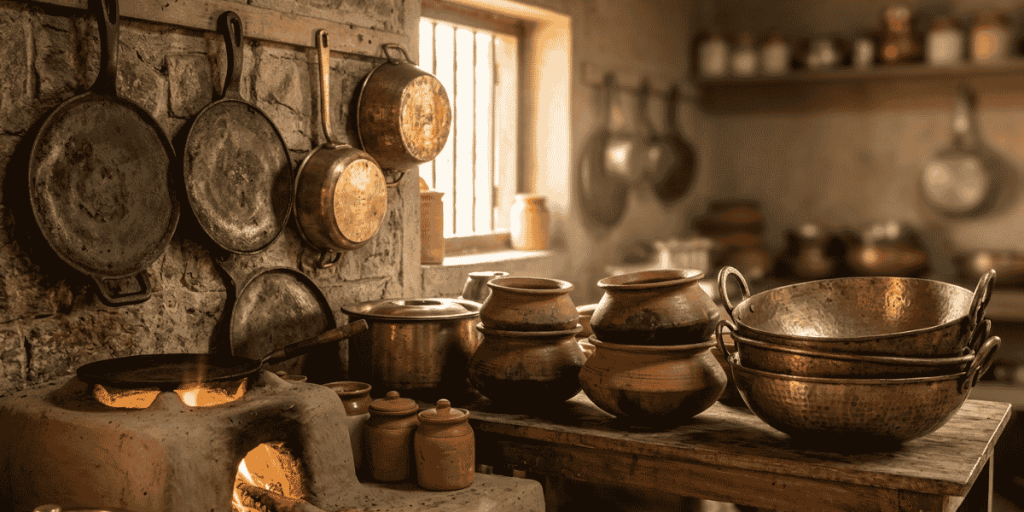
Indian cuisine is uniquely demanding. On any given day, a single kitchen might witness the blazing heat required to sear a perfect tadka, the prolonged slow-simmering of a robust dal, and the aggressive acidity of tomatoes, tamarind, or yogurt bubbling in a gravy. Because our culinary techniques are so diverse, relying on a single type of metal for everything is not just inefficient—it can compromise the safety and flavor of your food.
Choosing the right cooking vessel requires understanding thermal physics, chemical reactivity, and our rich culinary heritage. In this comprehensive guide, we break down the best metals for Indian cooking so you can make informed, healthy, and highly practical choices for your home.
Tri-Ply Stainless Steel
If you are looking for an all-round, low-maintenance solution for your daily meals, tri-ply stainless steel stands at the top of the pyramid. Standard single-ply stainless steel is notorious for poor heat distribution, leading to localized hot spots that scorch delicate gravies. Tri-ply technology engineered a brilliant fix by sandwiching a highly conductive layer of aluminum or copper between two sheets of food-grade 18/10 stainless steel.
The primary superpower of stainless steel is that it is completely non-reactive. You can cook highly acidic foods like tamarind rasam, tomato-based curries, or kadhi for hours without the metal leaching into your food or altering its flavor profiles. It does not rust, requires zero seasoning, and is entirely dishwasher safe.
For anyone looking to completely streamline their kitchen utility with durable, toxin-free gear, investing in a complete triply cookware set in India is the smartest long-term decision you can make. It seamlessly bridges the gap between traditional slow-simmering and modern culinary convenience.
Cast Iron and Carbon Steel
For centuries, the heavy iron kadhai and the rustic iron tawa were the cornerstones of Indian homes. Today, health-conscious cooks are returning to these roots to escape the health hazards associated with synthetic non-stick coatings when exposed to high Indian cooking temperatures.
- Cast Iron offers exceptional heat retention. When heated, it radiates steady, intense warmth, making it flawless for deep-frying puris, slow-cooking rich meats, or preparing crisp dosas. Furthermore, it naturally transfers trace amounts of dietary iron into your meals, which is highly beneficial for overall family health.
- Carbon Steel, its lighter and more responsive sibling, adjusts to temperature shifts much quicker. It is the perfect material for slap-cooking daily chapatis, phulkas, and paranthas.
The only caveat with traditional iron is its vulnerability to rust and the effort required to build a natural non-stick patina via oil seasoning. To enjoy the incredible advantages of iron without the tedious initiation process, opting for a pre seasoned cast iron tawa allows you to flip flawless, restaurant-style crisp dosas from day one.
Traditional Brass and Bronze
Walking into a traditional Indian kitchen often brings you face-to-face with gleaming brass and bronze heavy vessels. These metals boast incredible thermal conductivity and have deep roots in Ayurvedic principles, but they require strict culinary discipline.
- Brass (Pital) An alloy of copper and zinc, brass distributes heat uniformly, making it legendary for slow-cooking aromatic biryanis, rich dals, and festive kheer. However, unlined brass reacts aggressively with organic acids present in tomatoes, curd, and lemon, creating toxic chemical compounds. Therefore, for general cooking, brass must always be lined with a thin layer of pure tin—a traditional process known across India as Kalai. Unlined brass should strictly be reserved for non-acidic tasks like boiling milk or making dry sweets.
- Bronze (Kansa) An alloy of copper and tin, Kansa is widely recognized as a premium therapeutic metal. It retains heat remarkably well and keeps food nutrients intact. While it makes for excellent serveware and is ideal for boiling water or cooking non-acidic porridges like ayurvedic kanji, it shares the same reactive sensitivities as brass and must be handled with care.
The Aluminium Caveat
While raw, un-anodized aluminum is incredibly common across India due to its affordability and quick heating capabilities, it is highly reactive. Cooking acidic or excessively salty dishes in bare aluminum causes the metal to leach steadily into the food, posing long-term health risks. It is highly advisable to substitute bare aluminum with hard-anodized variants or tri-ply stainless steel.
Cookware Selection Matrix for Indian Homes
To simplify your kitchen choices, here is a quick reference guide mapping common Indian culinary tasks to their ideal metal counterparts. If you are trying to decide which pieces to swap out first, evaluating a comprehensive healthy cookware materials comparison can help you audit your current kitchen setup based on long-term wellness and safety profiles.
- Acidic Gravies and Sauces (Sambar, Tomato Gravy, Kadhi, Rasam) Ideal Metal: Tri-Ply Stainless Steel Primary Benefit: 100% non-reactive; preserves authentic taste profiles without metallic contamination.
- High Heat Flatbreads and Pancakes (Dosas, Chapatis, Paranthas) Ideal Metal: Cast Iron or Carbon Steel Primary Benefit: Superb heat retention and distribution; builds a completely non-toxic, natural non-stick surface.
- Festive Slow Cooking (Biryanis, Kheer, Heavy Dals) Ideal Metal: Tinned Brass (Kalai Pital) Primary Benefit: Unmatched thermal gentleness preventing bottom scorching during long cooking cycles.
- Basic Everyday Boiling (Water, Milk, Steaming Vegetables) Ideal Metal: Standard Stainless Steel Primary Benefit: Lightweight, highly budget-friendly, ruggedly durable, and completely safe for non-acidic items.
Final Thoughts for Your Kitchen Setup
There is no single best metal for an Indian kitchen. Instead, the secret lies in optimization. For your daily, fast-paced, and highly acidic cooking, lean into the absolute safety and convenience of a multi-clad setup. For your high-heat breakfast staples and searing needs, trust the reliable physics of seasoned iron. By treating your cookware as specialized culinary tools, you optimize your cooking efficiency, elevate the flavors of your ancestral recipes, and safeguard your family’s long-term health.


Leave a comment